Health & Fitness
The How and Why I Am Voting For President
One person's method reasoning for voting as they do.

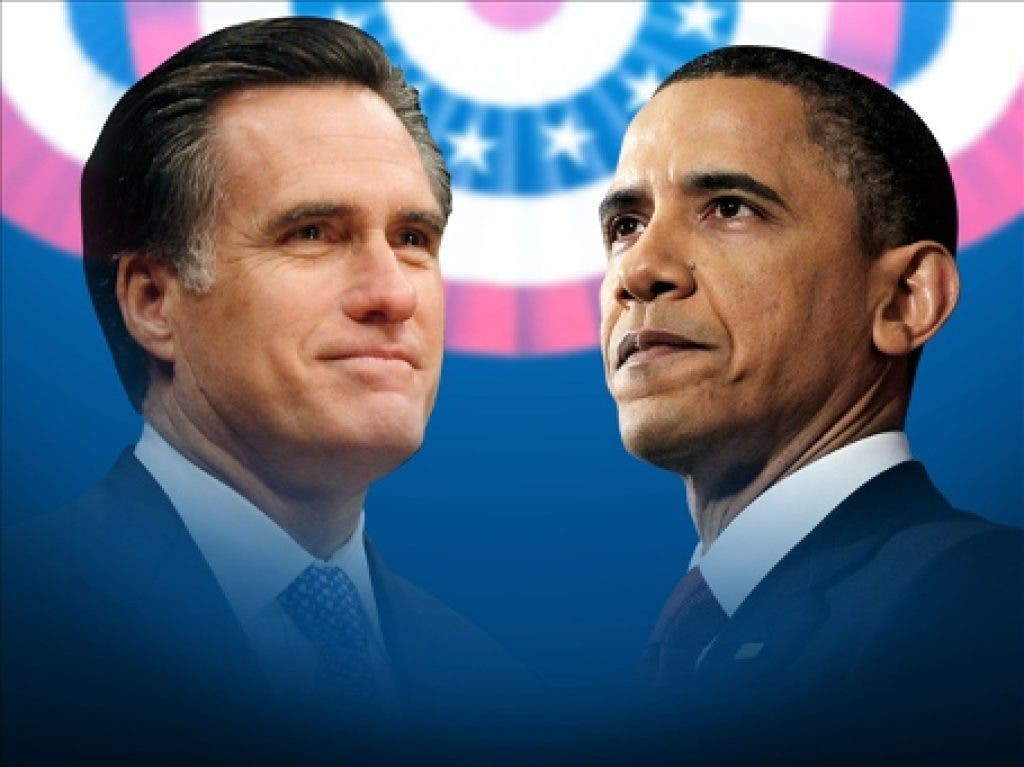
Well, the insufferably long campaign season is coming to an end and we will soon be able to exercise our privilege to select our next leader. It would be naive to think politics were never ugly or shallow or pandering or misleading or anti-intellectual in decades past, but it sure seems like this year has exhibited those traits in spades.
Is it because the Citizens United ruling poured unspeakable amounts of untraceable money into campaigns? It couldn’t have helped the situation.
Is it because the electorate...you and me...get taken in by things like “You didn’t build that” or “Binders full of women” as though these things are actual, substantive points against one candidate or another? Or are they nothing more than turns of phrase twisted for political advantage to push our tribal buttons and to dupe a credulous public? Sadly; many do seem ready to take marching orders from organizations that care little about the facts and more about their political fortunes. You would think that, with the non-stop streams of information that bombard us, we would show signs of being more informed about the issues, the cogent facts, history, evidence and the opinions of [actual, non-political] experts. Alas; it would appear that we have somehow confused and conflated “opinion” with “journalism”. It is well known that we, as a species, seek that which affirms what we already believe and shun that does not. ...and it does not bode well for us as a nation that this election season has pushed those instincts into overdrive.
Phrases like “socialist”, “job creators”, “war on women”, “war on religion”, “apology tour” and the rest are all just stinging white noise that benefits partisan actors but benefits the general public not one iota.
Back in 2008, I voted for Barack Obama for a number of reasons. Forward in my thinking was that I couldn’t possibly allow the likes of Sarah Palin...someone whose theology believes that we are in the biblical end-times...that close to nuclear launch codes. (Statistically, McCain stood something like a 1 in 3 chance of dying in office). Next in mind was that McCain...someone that I might have supported years earlier...fell under the influence of more and more extreme factions of his party. Come the 2008 election he seemed willing to say anything to any voting bloc. This resulted in the final Hail Mary of unleashing Ms. Palin on an unsuspecting public hoping to appease the evangelical crowds. It seemed the complete and final destruction of a good political career.
As for the Obama ticket; there is no question that there was a lot of Kool-Aid surrounding the young candidate that could string whole sentences together. It made me happy to think I wouldn’t have to feel ashamed when our president interacted with other world leaders. (Remember when Bush and Blair would speak back-to-back? ...like both versions of Charlie from “Flowers For Algernon”) Expectations were inexplicably high for Obama. I don’t think his rhetoric was any more over-reaching than any other candidates. It is politics after all. Nobody will get elected with “Things are bad and I promise to try to not let it get worse.” Still; the euphoria was unprecedented in my lifetime amongst a large group of Americans after the last election. For myself; I figured that if our economic plane was in a nosedive, I would be perfectly relieved [if not happy] to return to level flight for a while. To date we have some growth, the markets and my 401k have rebounded, housing prices are increasing. Job growth has been tepid, but 1) economists initially underestimated the scale of the crisis and 2) the economist-backed bills promoted by the White House were thwarted by an intransigent GOP at every opportunity.
I, just beginning to understand the depth of the financial chasm before us, had a more realistic goal for the next presidential term. If we didn’t implode and relive the 1930’s, I would consider it a success. I felt the financial hole that we were tumbling into would take longer than four years to fill. On the whole, I got exactly what I bargained for from an Obama presidency and am thankful for it. We all had TV-side seats as we watched the economic equivalent of making sausage. We all held our noses as we poured gobs of money that we didn’t have into bailing out the very same banks whose hubris and unbridled risk-taking were key factors in our economic woes. [Why we didn’t have more strings attached...like lifetime bans from banking for boards of directors...I’ll never know] We did this (and other things) because economists...the real experts in the field...said the consequences would be far worse if we didn’t bail them out.
This last example...economists showing us the unvarnished options of “bad” and “unspeakably bad”...is why I will be voting for Obama again. I am a scientist and have a great appreciation for evidence. I like to think that I also have a better than average [but not infallible] ability to distinguish good evidence from bad evidence from bull-hooey. I know that things are bad now and it is very tempting, with our smart-phone, iPad and Twitter attention spans, to seek change for change’s sake. But we mustn’t lose sight that there is actually evidence and there are actual experts that can inform us as to which policies actually have a chance of addressing our economic woes.
The great majority of economists are much more closely aligned with Obama and some of the Romney/Ryan claims just don’t add up (not that every Obama number is 100% unimpeachable). Take, for instance, the Romney/Ryan plan to reduce taxes, close loopholes and increase military spending. The campaign is doing everything it can to avoid saying the mathematically unavoidable. The wealthy are far less affected by the closing of loopholes than the middle class. Hence, the plan benefits the wealthy. Now I have no problem with wealth and I promote seeking wealth through the free market, but trickle down economics has been debunked. Tax cuts do have some positive effect on job growth, but the context and scale proposed by the red ticket is nowhere near that as when tax reforms elicited significant growth at other times in history (i.e. with JFK). There is no reason to think that Romney’s reforms could be effective at creating the unprecedented growth promised. As an economic plan, economists, for the most part, think it stinks on ice.
Hence, I can’t vote for Romney on economic issues.
Then there is the whole social policy thing. Religious conservatism has tried to infiltrate politics for a long while (witness getting “Under God” into the Pledge and “In God We Trust” on currency in the 1950’s). In the 1960’s, Barry Goldwater saw the direction things were going and presciently warned us with:
“Mark my word, if and when these preachers get control of the [Republican] party, and they're sure trying to do so, it's going to be a terrible damn problem. Frankly, these people frighten me. Politics and governing demand compromise. But these Christians believe they are acting in the name of God, so they can't and won't compromise. I know, I've tried to deal with them.”
It is well-argued that it was with Reagan that the formal courting of the evangelical crowd started and so began the clear association with conservative religious beliefs with the Republican party. This is why we now seem to see the most ill-informed and primitive statements come from lawmakers with ‘R’s in front of their name (i.e. Akin, Broun and Murdock).
Let’s take gay-marriage as a prototypical “family values” issue that is now owned by the GOP. The evidence is overwhelming that gender preference is based in biology. It is not a choice and it is not a result of societal pressure. “Gay” is to “straight” as “left-handed” is to “right-handed”. People of both ilk exist. If legislation that would deny left-handed individuals the rights to marriage, hospital visitation and inheritance makes you recoil, then denying those rights to gays should do the same. Romney/Ryan would proudly and unabashedly treat gays differently.
Hence, I can’t vote for Romney on moral grounds.
Let’s not ignore that Romney has held held most positions on most topics of import. I actually think he would be a fairly moderate leader given his history as governor where he invented the health-care reforms that he vehemently opposes now. More than any candidate; I don’t know if I have ever seen a candidate that has so transparently pandered to various voting blocs with so little disregard for personal consistency. He just seems so sullied by the political process that I don’t actually know where the true Mitt sits.
As far as Veeps go; Biden is sort of a non-actor for me. Paul Ryan, on the other hand, was specifically chosen to bring Tea Party creds to the ticket and the GOP economic plan. What book has had the most influence on Ryan and his policies? Ayn Rand’s “Atlas Shrugged”...a work of fiction.
As a scientist, I have considered how I make decisions. I have also contemplated how the scientific method works to arrive at truths that are out of reach of other intellectual endeavors. I feel that eliminating wrong answers is as [or more] important that finding the one right answer. Eliminating that wrong answer may not give the the final result, but it gets you closer to the truth. I see Romney/Ryan as offering a number of objectively wrong answers.
Hence I will be voting for Obama/Biden.
I myself am in a political race running for the aldermanic seat in Geneva’s 1st Ward. One might think that I should be more cautious about writing on subjects like this. After all, there might be some anti-Obama voters in my ward that might not vote for me now (not that national and local politics overlap too much). My campaign manager has, in no uncertain terms, told me “don’t become a politician yet. Write what you believe and feel strongly about.”. I hope I am being true to that. Will it help me or hurt me? We’ll find out next April.


